_3.png "Global CIO Forum logo")
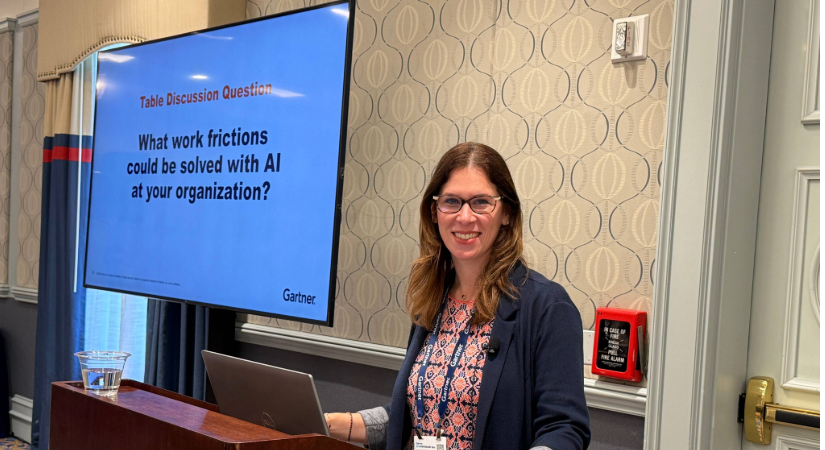

Eighty-eight percent of HR leaders report their organizations have not realized significant business value from AI tools, according to Gartner, Inc., a business and technology insights company.
This research was showcased during Gartner HR Symposium/Xpo taking place here through Wednesday.
“Typically, in an AI-enabled organization CHROs try to empower employees to drive growth by encouraging learning, exploration and innovation,” said Sari Wilde, Practice Vice President in theGartner HR practice. “However, empowering employees is not enough and has no significant effect on the likelihood of exceeding revenue goals. Instead, HR needs to integrate AI into employees’ work to drive the desired growth.”
A July 2025 Gartner survey of 2,986 employees found that 77% take AI training when it’s offered, and 65% say they are excited to use AI for work. The same survey found that 62% of employees say AI has saved them time, with those in AI-relevant roles saving an average of 1.5 hours per day.
Conversely, 42% of employees say they know how to identify where AI can be used to improve their work. Seven percent report that AI has actually cost them time.
“Employees struggle with AI’s relevance to their work and many are not using it due to this as well as a belief that their coworkers are not using AI, and AI cannot improve their work,” said Benjamin Loring, Research Director in the Gartner HR practice. “Employees need guidance on how to apply AI to realize its benefits.”
To address these concerns, Gartner recommends CHROs take three key actions to create an AI work environment that encourages usage and enables growth:
Apply AI to Work Frictions
Employees are five times as likely to be top AI users when it solves work frictions, according to Gartner’s July 2025 employee survey.
To start, HR should help employees identify AI use cases – work experiences where AI could help, such as bottlenecks that hinder work performance and workflow tension points that cause wasted time and inefficiency. In addition, CHROs should partner with their CIOs to further build AI skills at scale and encourage employees to think deeper about AI possibilities.
Optimize Time Freed Up by AI
Only 7% of organizations provide guidelines to employees on how to use time saved by AI, according to a Gartner July 2025 survey of 114 HR leaders. This lack of guidance increases the likelihood that employees will not use their free time effectively, preventing them from achieving high performance.
To guide free time, CHROs should collaborate with their C-suite peers to identify expected outcomes of AI tool use and then communicate the organization’s expectations to employees. Time should be redirected to high value tasks, specifically work that drives organizational growth, as well as skills development for future organizational needs. HR leaders also need to encourage employees to use found time for personal well-being and to give back and support the broader community.
Adapt Workflows to AI
The Gartner July 2025 employee survey revealed that 73% of employees indicate that technology has replaced work they did as part of their job five years ago. Yet, technology replacement of work tasks has increased inefficiencies – 38% of employees reported that they’ve had to create new processes due to technology and 41% reported they have to work around formal processes.
To address a work environment that lags behind AI-driven work changes and has outdated workflows that hinder employee performance, CHROs must evolve work, not the workforce. This means leveraging employees and business leaders to help identify process inefficiencies that restrict performance while also evaluating work processes and operations for change, including but not limited to roles and governance models.
Excerpted and sourced from: https://www.gartner.com/en/newsroom/press-releases/2025-10-28-gartner-survey-shows-88-percent-of-hr-leaders-say-their-organizations-have-not-realized-significant-business-value-from-ai-tools
Weekly newsletter
Get the latest blog updates, practical hiring insights, and featured reads delivered straight to your inbox.
Read about our Privacy Policy.